Sunday, October 16, 2011

Lake Titikaka

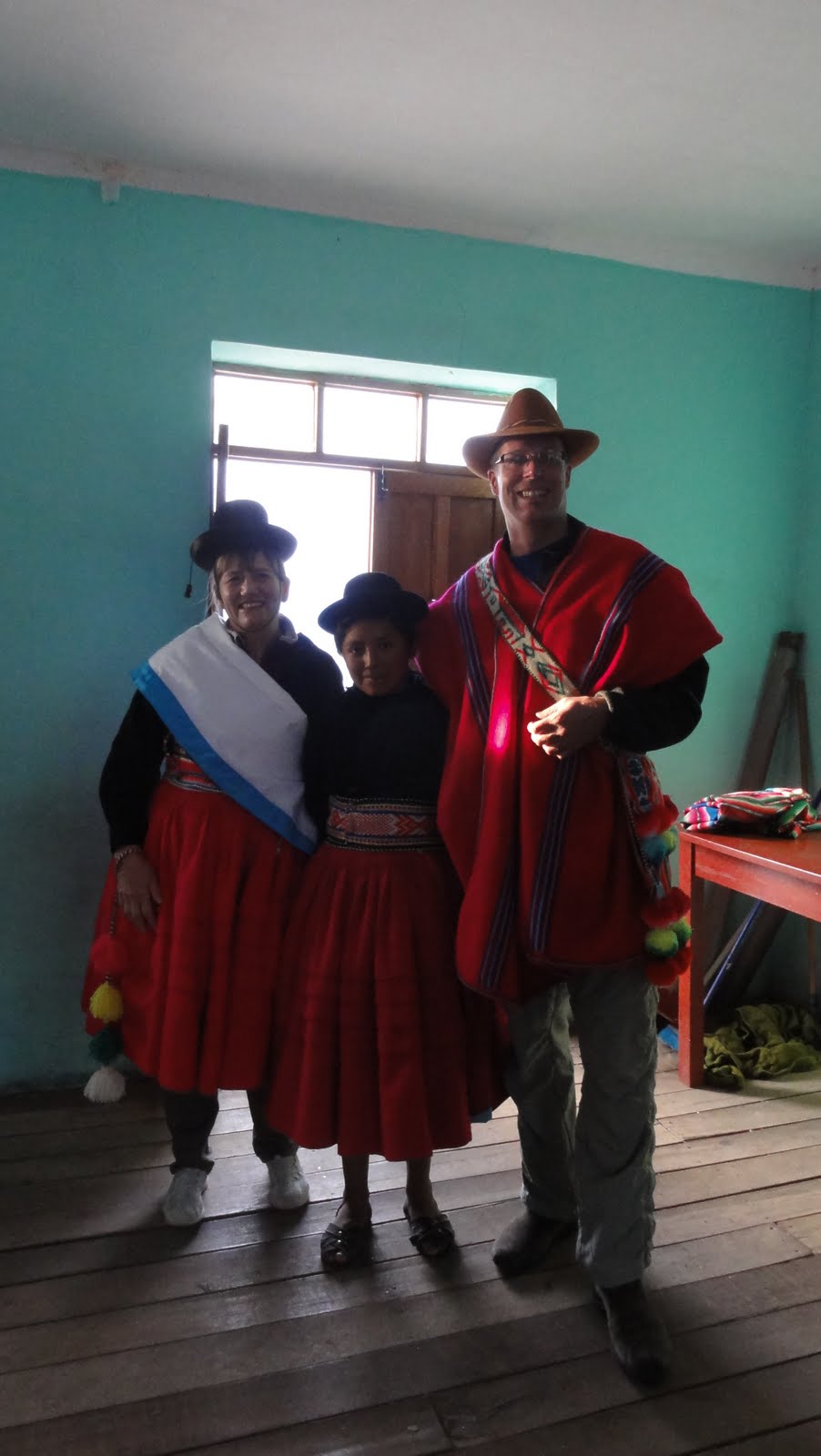
Monday, Sept. 19 - It is a beautiful blue sky day, but there is a cold wind blowing across the lake. So we have to bundle up in our fleeces and jackets to enjoy the fresh air on the roof of the boat. Lake Titikaka is the world's highest navigable lake. It is very important in Incan mythology as the place where the world was created. We see small pockets of habitation along the coast and then head into the open lake for Ilsa Taquile, about 2 hours away. Across on the far shore, is Bolivia. The area is described as being a time capsule of preserved Peruvian and Bolivian cultures. And certainly it is isolated in many respects, but tourism has certainly made a big impact. On the small island of Taquile there are 32 restaurants all vying for our business. We are served a delicious lunch of quinoa & pumpkin soup, followed by grilled rainbow trout. (a bit of trivia - the lake was stocked with Canadian rainbow trout, sometime in the 1960's and they have thrived to become one of the staples of the area.)The community on the island has its own elected leaders. The municipal building and church are both locked, as there is no priest and no money to run the government offices. The school, however, is fully operational. Percy describes some of the local customs - including the courting rituals - which involves flashing a mirror at the boy of your choice, and pelting him with stones to attract his attention. I guess facebook hasn't reached the island. Our short walk uphill walk to the main square was an introduction to climbing at high altitude. So far so good. The only effects I am feeling from the altitude is some tingling in my fingers and that could be from the altitude pills. Back on the boat, the sun comes out and we bake in its rays - but careful to lather up with sunscreen. Now we are on our way to Luquina Chico for our homestay. At the dock we are enthusiastically greeted by the local families and are led ceremoniously, with musical accompaniment, to the town meeting place. Here we find another Gap group is enjoying a soccer game against a team of the locals. The Gap team wins. Now we are introduced to our homestay hosts. To our surprise, they proceed to dress us up in traditional dress. This goes over our warm clothing, jeans and hiking boots. I look as large as a house with 4 skirts, topped with a jacket and oh,I almost forgot the fashionable bowler hat! The soccer field is transformed into a dance floor. After a demonstration of the traditional dance steps, we were all invited to join in. By now it was dark. Our host, Melissa, led us off to meet the family where we would stay for the night. Accomodation was simple but comfortable enough. Three beds filled the room and we were delighted to find an electric light and an ensuite bathroom. There was only a trickle of water at the sink and the toilet need the assistance of water from a handy bucket to fulfill its job of flushing. But this was more luxury than we expected. We were welcomed by the family of mother, father and three teenagers in the cosykitchen where we presented the mother with the gifts of fruit, oil, rice and sugar that we had been advised to bring along. Luckily for us, Marco, the guide from the other Gap group was billeted with us. He acted as an interpreter which saved us an uncomfortable evening of sign and body language. We had a tasty meal of barley soup and a dish of rice, potatoes and veggies. Back in our room, we discovred that the water was turned off for the night - but never mind. The beds were covered in many layers of heavy blankets, so despite the chill of the night and the rainstorm that swept through the village during the night, we are snug and warm in bed.

Next stop - Puno

Sunday Sept 18
High altitude warning - we are heading for the altiplano at 3820 metres.
We're on the way to Lima Airport by 7 a.m. With great determination, Minda and Dick are relocated with their luggage which has been languishing in the lost luggage area of the airport.

The flight to the dusty town of Juliaca is quick and we are immediately transferred to a coach that will transport us to the town of Puno. We are also joined by Percy, who will be our local guide while we are in this area.
This is not really a toursim centre and I am surprised how many people in the towns and surrounding countryside wear the traditional dress that we see in tourist brochures.
Puno is built on the steep hillside rising up from Lake Titicaca. This is our departure point for a two days on the lake. But first, we settle into the pleasant Hotel Italia explore the town.
We have been advised to take it easy while we acclimatize to the altitude. So, we take that advice seriously and after a tasty lunch, we amble gently around town. There is not much to do anyway, except check out the plazas and markets. Its pretty chilly at this altitude, and there are plenty of shops selling warm sweaters and gloves. Manuel warns us that everyone claims to sell alpaca even though quite often its acrylic. Regardless, Peter buys a nice "alpaca" sweater from the lady sitting with her bundle of goods outside our hotel.
Our next night will be at a home stay, so we have to leave our luggage and take everything we need in our day packs. This is the first of several times that we have to repack and leave some of our belongings in storage.
The next morning after breakfast we are greeted by a colourful fleet of bicycle "limos" that will take us to the port to board our motorboat for the next leg of our journey.


Monday, October 10, 2011

Lima for a day

We had quite a long delay at Pearson Airport, so it was after 2 a.m. before our heads hit the pillow in the Lima Wasi Hotel; a pleasant hotel, well located in the Miraflores area. Breakfast was provided in the rooftop restaurant and we headed out to see as much as we could cram into the day. This would be one of the few unscheduled days of the trip. Lima is a big bustling city - very confusing street configurations and we had been advised to take taxis to our destinations. But instead we set out on foot and quickly found that we were very close to the beach front where the waves crashed in on the black sand beach. Perched above the coast line, tucked into the cliffside was a contemporary shopping and entertainment centre, Lacomar. If we were in a shopping mood, this would have been perfect, great for people watching - but also a good spot for restaurants, which as it turned out was where we dined with our group in the evening.
I had quite a list of "must-do's" in Lima, but clearly we had to make a choice. We decided to go and check out the pre-Incan mud brick pyramid, Huaca Pucllana. This pyramid has only been recently excavated by archeologists (since the 1960's). To all appearances a dusty hill, it was mostly a hangout for dirt bikers, who enjoyed its peaks and valleys. And then, lo and behold, excavations expose this series of incredibly well-preserved mud brick structures, dating back abouy 2000 years.


A guided tour is included with the admission price. Here we also made aquaintance with our first llamas and alpacas. Second on my to-do list was lunch at the restaurant overlooking the pyramid. Its written up in all the guide books as the place to dine - recommended also by some friends. It was busy with large groups, clearly many of them locals, all enjoying a hearty lunch. I sampled a typical Ceviche, while Peter tucked into the tuna. Very yummy.


Now there isn't time to visit the main square, the Plaza des Armes, to see the lovely Spanish architecure, built over the Incan structures. So instead we head back to the beach front and find our way down the cliffside to walk along the beach, where we watch surfers riding the waves and hang gliders soaring above the city. it is windy, but not too cold. We head into Nautica Rosa, the beautifully situated pier restaurant. It feels cosy and decadent to be drinking cocktails and eating rich chocolate cake at sunset on the beach front of Lima. It is time for our first meeting with our Gap travelling companions. I am immediately impressed by our guide Manuel, who knows all of us by name without introductions. It takes me most of the two weeks to get the three Robs correctly identified. Seems like an okay bunch of people. Some only joined us the next morning. There are 4 of us Canadians, two from Washington State whose luggage was lost enroute, one young Aussie girl, a couple of New Yorkers and the remaining 7 are from the UK. We have a quick go-round of introductions and then its off to dinner.


Manuel takes his job of sharing the local culture and best food options with us, very seriously. This becomes apparent right away as he encourages us to try a variety of specialty dishes, all of which are delicious. This is only our second meal in Peru, but we quickly find out that food design is a huge part of most restaurants. We almost all take out cameras as the food is brought to the table.

Early start tomorrow as we head to the high altitude of Lake Titicaca.

Peru Panorama

After Egypt, what next? It seemed that both Peter and I had a desire to see Machu Pichu at sunrise. That of course meant a trip to Peru and hiking the Inca Trail to get to the classic view point in the early morning. Was I up for this kind of adventure? Sounded pretty strenuous to me. After some research into different tour companies and talking to friends, we chose Gap Adventures Peru Panorama. All the literature said that the hike is managable to anyone who is reasonably fit. The only major concern is the altitude. So in March 2011, we made out bookings and bought hiking shoes. Before we left, we made sure our shots were up to date and we had all the possible medical needs (for malaria, altitude and travel sickness). Oh yes, and we did some casual training, trying to improve our fitness particularly on uphills. And we decide, after experimenting, that hiking poles were a good investment.


Usually I start a blog before we leave on the trip and add to it along the way. We have been home now for over a week and I haven't got started yet. While we were travelling, I could barely keep up with my notebook, let alone sit at the computer and compile insightful and witty comments about our experiences. Many times I felt rushed and very "scheduled", the rest of the time I was exhausted - and busy enjoying the unfolding adventure. All in all, the trip was a truly memorable experience - something to be remembered and savoured over time. I can't say I loved every moment (there were times when I was cursing under by breath and wondering whose crazy idea this was anyway) - but in the end, I loved the accomplishment and now that I have had time to think about it and review the photos, I can appreciate it even more. While we were on the trail, I was mostly concerned about survival - putting one foot ahead of the other, breathing in enough of the thin air, and trying not to get left behind. But in retrospect, the challenge was invigorating and I made it to the top, more or less in one piece. It goes without saying, that Peter, even when he wasn't feeling well, conquered the hike, at good speed, mostly up with the front runners of our trekking group. Of course, there was a lot more to the trip than the hike. Itinerary was - Lima, Juliaca for Puno, Lake Titicaca, Cusco, Ollantaytambo, Inca Trail to Machu Pichu, Aguas Calientes, Cusco, Puerto Maldanado, Tambopata Lodge in the Amazon basin and back to Lima.
We left Toronto for Lima on September 16. Lucky for us, there is direct Air Canada flight direct from Toronto to Lima every couple of days.


The adventure begins.

Thursday, December 30, 2010

Random thoughts

It’s almost three months since we returned from our great Egyptian trip – but it is still fresh in my mind. I have just completed a 4 week lecture series on The Great Goddesses of Ancient Egypt with Dr Lyn Green. Now that I know that there are seven Hathors, I am even more confused than ever. But you have to remember that we are trying to make sense of 5,000 years of history in tiny information bites. Now I am trying to learn Hieroglyphs! How crazy is that?

In the temple to Hathor at Dendara
Here are some random thoughts for future travels:
1. Always keep small bills for market shopping. If you don’t have the exact amount for a purchase, you might have a loud argument about getting your change.
2. Have change for WC visits. I didn’t mind tipping the washroom attendants, because when they were present, the bathrooms were pretty clean.
3. A good handful of Kleenex is very useful if you need more than 4 squares of toilet paper.
4. Although most tips of what to wear suggest running shoes, I found them too hot and good sturdy open sandals were much better for almost every excursion – except for a desert trek.
5. Covering shoulders and knees is mandatory in mosques, but it is considered respectful all of the time. Capris were the most popular wear for wormen tourists I found, but I liked loose, cool pants and tops that kept me from burning to a crisp under the relentless sun.
6. Here’s a great tip I got from a friend, on long hot outings, take a damp cloth in a Ziploc bag to cool your face and neck. I also brought a small spray bottle of water to mist us down during the heat of the day.
7. For a first time visitor to Egypt, I strongly advise joining a guided tour. Insight Vacations and their partner in Egypt, Spring Tours, were fantastic. We were well taken care of the whole trip – but didn’t feel stifled. Our guide was an Egyptologist, with a good sense of humour. And our fellow travellers were excellent companions on the journey.

Monday, October 11, 2010

Pyramids and more

Friday, October 1
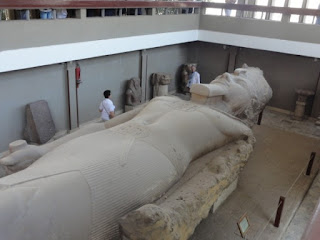
Sadly this is our last day of the tour, but Abdu promised us a good one, and he was right. We were the first bus to arrive at Memphis as the site opened, so that we were able to have a good look at the fallen statue of Ramses II. He has been covered, where he was found. with a viewing structure, to protect him from the elements and the ravages of the tourist hoards.


Although Memphis was one of the capitals of Ancient Egypt, to the casual tourist there is not much evidence of the early civilization - just a few statues, including a lovely alabaster sphinx, some abandonded sarcophogi and the line up of merchants stalls. For the record this was the only place I encountered a dirty washroom. The journey here through the outskirts of Cairo was suddenly very rural with fields and farmland and donkey carts. The road ran beside a canal that was thick with garbage, floating debris and people going about their daily commute.
From Memphis we headed directly to the necropolis of Saqqara where the famous stepped pyramid is located. This pyramid is purported to be the very first pyramid. Accredited to Imhotep and built for the Pharoah Djoser this was an era of breakthrough in architecture and building techniques.
There is much more to this area than the pyramid, but time, on a tour like this, takes its toll and we really only have time for a cursory look and a quick history lesson from Abdu. The enclosure limestone wall, with 40 columns and many false doorways, provides an impressive entrance to the complex. Peter would be able to express better the structural achievements of these times. I would love to have more time to appreciate and explore this area, rich with mastabas, chapels and temples.
Back on the bus and on to Giza. I don't think it matters how many pictures you have seen of the Great Pyramid. Up close, when you come face to face with it for the first time, all of the grand words make sense. It is immense in size and dazzling in its creation. We are suitably at a loss for words, and gaze at the huge blocks that climb upwards to the peak. You can go inside, but we have tickets to the second pyramid so we clamber up a few tiers of rocks, as far as we are allowed just to say we've been there.
The plateau is vast, so we take the bus to the next level which is busy with camels, horses, carts and merchants' stalls. No end of options are offered by the industrious locals for the pleasure of tourists! The line up of tour buses is comical.
We have two goals, to go inside the pyramid of Khafre and to see the reconstructed solar barque. There are no cameras inside the pyramids. But there is nothing really to record except memories. The entry to the second pyramid is steep and very low. You have to double up like a pretzel and creep your way down the narrow passage. There is a brief respite where you can straighten up and then, back down in a crouch again. Enroute you can peer into a mysterious unfinished chamber and see evidence of another passageway. The large granite sarcophagus is the only thing to see in the high vaulted burial chamber - except for the graffiti left by Belzoni in 1818 when he discovered the entrance. We stand for a moment out of respect but the original inhabitant is long gone.

In 1954 there was an incredible discovery in a pit beside the Pyramid of Khufu (great pyramid.) It was a dismantled boat, intended for the use of the pharoah as he made his journey through the underworld. It took 14 years of painstaking reconstruction to re-assemble the boat, in the way it was intended, using hemp to hold it together. A special museum has been built beside the pyramid, near to where it was discovered. The boat demonstrates the incredible craftsmanship, ingenuity and skill of the Ancient Egyptians. I am a great admirer.

And the final item on our agenda is a visit and quick salute to the mighty Sphinx. We are all very hot, tired and dusty. The wind has been blowing desert sand into our eyes and mouths. Even the tourists learn to adopt the traditional head scarf to advantage. And so back to the hotel and fond farewells to our travelling companions. It has been a great journey, an excellent adventure with good companions and a terrific guide.

Saturday, October 9, 2010

Cairo street scenes

Thursday, September 3o
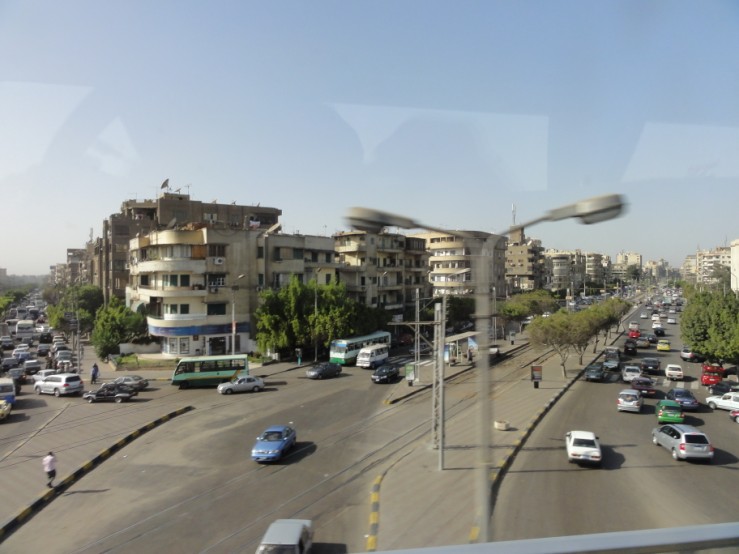
Today we said goodbye to the ship and its crew and took the flight from Luxor back to Cairo. Although its not a long flight, the day seemed tedious with waiting, transfers and travelling. The domestic arrivals area in Cairo airport is a mess with renovations. We would all have appreciated an earlier flight so that we could have had more time to explore the crazy city of Cairo. It is a bit intimidating and needs a bit of guidance before setting out aimlessly. We had the same excellent bus driver in Cairo that we'd had before, so we negotiated the traffic safely back to the deluxe comfort of the Marriot Hotel.


One of the things I would have loved to do was visit Old Cairo which is the ancient Coptic area. But there was no time for that. Instead Peter and I joined forces with new friends Kathy and Bennett and took a taxi to the 600 year old souk Khan el Khalili. This is one of the oldest markets in the world. Our experience here was a great adventure, and definitely a highlight of trip.
When we alighted from the taxi, we were almost immediately greeted by a local who wanted only to practice his English - or so he said. Mohammed was a persuasive talker and an affable guide who said he was studying to be a lawyer and worked at the local mosque. We all knew that this was likely just a story for the gullible tourists, but we decided to go along with him. He quickly led us into the heart of the market, helping us to avoid being run over by the fast moving pedestrian and bicycle traffic. Tray loads of bread the size of a door, floated by held aloft by guys riding bikes and cars occasionally threaded there way along passageways, just wide enough for them to squeeze by. We moved deeper and deeper into the interior, along ever smaller laneways. Mohammed walked at a brisk pace and didn't leave much time for idle browsing. After a while we noticed that we were the only tourists afoot. The merchants watched us curiously as we trotted by. I didn't take out my camera, much as I wanted a record of our journey. It just didn't seem right. We stopped at a spice shop but moved on once we said that we couldn't take spices back home. We declined to visit a papyrus shop and a visit to the top of a minaret in the mosque and eventually after more twists and turns, now through darkened lane ways, arrived at Mohammed's grandfather and nephews' shop, where they made inlaid boxes. The four us joined forces as to choose and bargain. Our negotiations were fairly firm and there was a lengthy period of haggling. I am not sure if the price was any deal or not, but we moved on from there with three lovely boxes between us.
More twists and turns, passing all kinds of colourful and exotic wares; sensory overload of colour, sound and smells. It was about an hour and half before we emerged and found ourselves across the street from the more touristed part of the market. Mohammed gave us directions to the restaurant where we wanted to go, and after extracting a good tip, he look his leave. It was well worth the small change to have the unexpected tour of a part of the bazaar where we would probably not have ventured on our own. On this side of the market, it was busier, with more familiar souvenirs for sale, tourists browsing and merchants calling from their stalls. As we entered the restaurant Naguib Mahfouz, we threaded our way through a room of hookah smoking patrons to the more formal part of the five star restaurant. Fortunately, 5 star prices in Egypt aren't what you would pay in some other places. We had an excellent authentic Egyptian meal, negotiated a fare from a taxi driver and ended the day with one more trip through the wild traffic of Cairo.